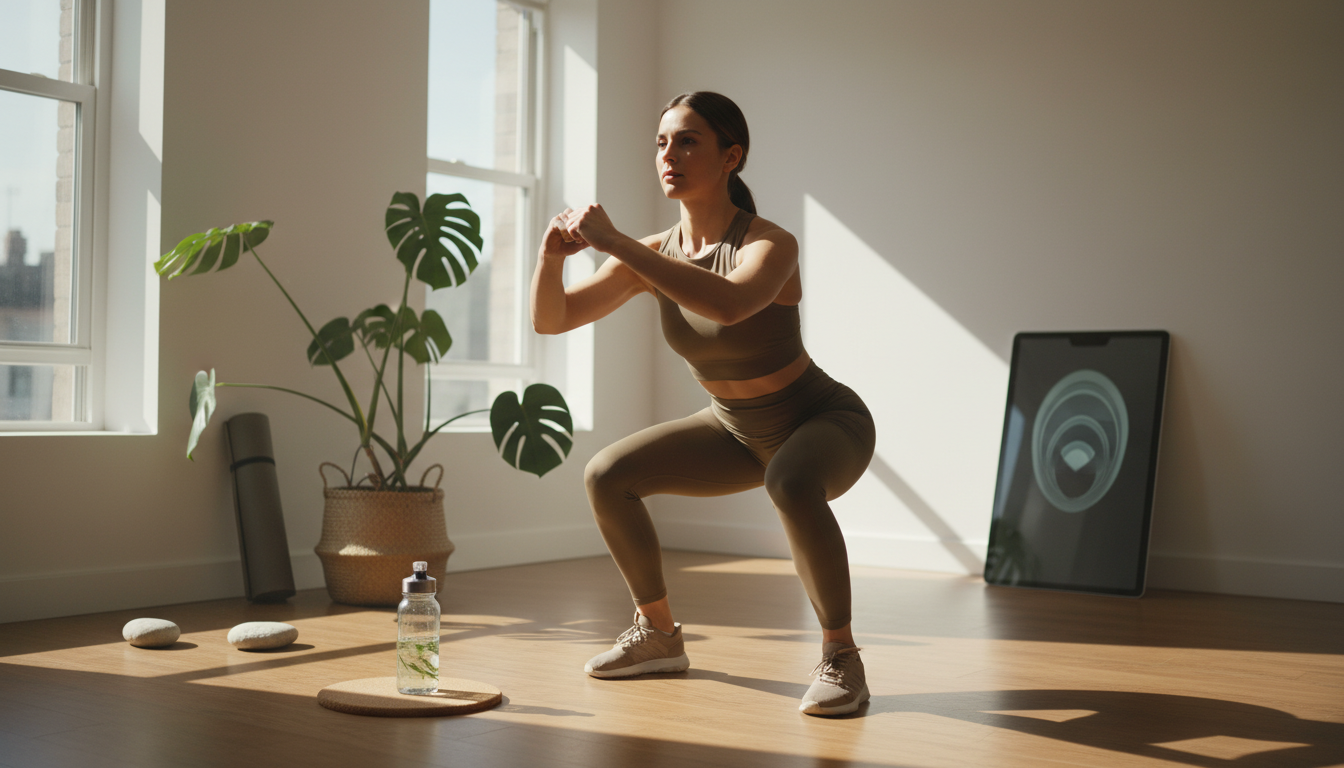

Creating a sustainable home workout routine without equipment has become increasingly popular in 2026, as more people recognize the importance of consistent, accessible fitness. Whether you’re managing a busy schedule, working on a budget, or simply prefer exercising at home, building an effective bodyweight fitness program is entirely achievable. This comprehensive guide will help you establish a routine that you can maintain long-term while seeing real results.
You might also find our guide on The Complete Guide to Understanding Food Labels and Nutritional Claims in 2026 helpful. Additionally, see 5 Evidence-Based Strategies to Improve Sleep Quality and Beat Insomnia in 2026.
Table of Contents
- Why Equipment-Free Home Workouts Are More Popular Than Ever in 2026
- Understanding the Fundamentals of Bodyweight Training
- The Science Behind Bodyweight Resistance
- Key Components of a Balanced Routine
- Building Your Sustainable Home Workout Framework
- Step 1: Assess Your Current Fitness Level
- Step 2: Set Realistic, Measurable Goals
- Step 3: Design Your Weekly Schedule
- Essential Bodyweight Exercises for Home Workouts
- Upper Body Exercises
- Lower Body Exercises
- Core and Full-Body Exercises
- Creating Progressive Overload Without Equipment
- Progression Strategies for 2026
- Nutrition and Recovery for Home Workout Success
- Continue Reading
Why Equipment-Free Home Workouts Are More Popular Than Ever in 2026
The fitness landscape has shifted dramatically over the past few years. In 2026, home workouts have become a mainstream fitness solution rather than a temporary trend. Recent fitness studies show that 68% of people who started home workouts during the pandemic continue to prioritize them, appreciating the flexibility, cost savings, and time efficiency they offer.
Equipment-free workouts eliminate excuses like expensive gym memberships, lack of space, or intimidation from crowded facilities. Your body provides all the resistance you need to build strength, improve cardiovascular health, and enhance flexibility.
Understanding the Fundamentals of Bodyweight Training
The Science Behind Bodyweight Resistance
Your body weight serves as an excellent resistance tool for building muscle and improving fitness. When you perform exercises like push-ups, squats, and planks, you’re engaging multiple muscle groups simultaneously, creating functional strength that translates to everyday activities.
In 2026, fitness experts emphasize that progressive overload—gradually increasing the difficulty of exercises—is crucial for continued progress. You can achieve this by increasing repetitions, reducing rest periods, or modifying exercise variations to be more challenging.
Key Components of a Balanced Routine
A sustainable home workout routine should include:
- Strength training (3-4 days per week)
- Cardiovascular exercise (2-3 days per week)
- Flexibility and mobility work (daily)
- Rest days (at least 1-2 per week)
This balanced approach prevents overuse injuries and ensures comprehensive fitness development.
Building Your Sustainable Home Workout Framework
Step 1: Assess Your Current Fitness Level
Before starting any routine, honestly evaluate your current fitness level. Can you do 10 consecutive push-ups? How long can you hold a plank? This baseline helps you choose appropriate starting exercises and track progress over time.
Consider consulting with a healthcare provider if you have any existing health conditions or haven’t exercised regularly in several years.
Step 2: Set Realistic, Measurable Goals
Sustainability depends on setting achievable goals. Rather than aiming to “get fit,” specify objectives like:
- Complete 20 consecutive push-ups within 8 weeks
- Hold a plank for 60 seconds
- Perform 30 consecutive bodyweight squats with proper form
- Increase daily step count to 10,000 steps
In 2026, using fitness tracking apps makes monitoring progress easier than ever. Many free applications track workouts, provide form guidance through videos, and send motivation reminders.
Step 3: Design Your Weekly Schedule
Consistency matters more than intensity. A sustainable routine fits naturally into your lifestyle. Consider your work schedule, family commitments, and energy levels when planning workout times.
A sample weekly structure might look like:
- Monday: Upper body strength (20-30 minutes)
- Tuesday: Cardio and core (25-35 minutes)
- Wednesday: Rest or light stretching
- Thursday: Lower body strength (20-30 minutes)
- Friday: Full-body cardio (30-40 minutes)
- Saturday: Active recovery (yoga, walking)
- Sunday: Rest day
Essential Bodyweight Exercises for Home Workouts
Upper Body Exercises
Push-ups remain the gold standard for upper body strength. Beginners can start with wall push-ups or incline variations using a sturdy chair. As you progress, work toward standard and decline push-ups.
Pike push-ups target shoulders and are excellent for building overhead strength without equipment.
Tricep dips using a chair or bench strengthen the back of your arms effectively.
Lower Body Exercises
Bodyweight squats build leg strength and improve mobility. Focus on maintaining proper form: chest up, knees tracking over toes, and full depth when possible.
Lunges in various directions (forward, reverse, lateral) strengthen legs while improving balance and coordination.
Glute bridges activate and strengthen your posterior chain, essential for overall fitness and posture.
Core and Full-Body Exercises
Planks in multiple variations (standard, side, dynamic) build core stability crucial for injury prevention.
Burpees provide comprehensive full-body conditioning, combining strength and cardiovascular benefits.
Mountain climbers elevate heart rate while engaging core muscles.
Creating Progressive Overload Without Equipment
Progression Strategies for 2026
Since you’re not adding weight, progression involves:
- Increasing repetitions: If you complete 12 push-ups easily, aim for 15 next week
- Reducing rest periods: Decrease rest between sets to increase intensity
- Modifying variations: Progress to more challenging versions (knee push-ups to standard to decline)
- Increasing frequency: Add an extra set or workout session
- Slowing tempo: Perform exercises more slowly to increase time under tension
These strategies ensure continuous improvement and prevent plateaus that derail motivation.
Nutrition and Recovery for Home Workout Success
Exercise represents only part of the fitness equation. Proper nutrition supports muscle recovery and energy for workouts. In 2026, most fitness professionals recommend:
- Adequate protein intake (0.7-1 gram per pound of body weight) to support muscle recovery and growth. Understanding how to read food labels and nutritional claims can help you make informed dietary choices that support your fitness goals.
Recovery is equally critical for sustainability. Quality sleep improves workout performance, accelerates muscle recovery, and supports hormone regulation essential for fitness progress. Aim for 7-9 hours per night, establishing consistent sleep and wake times even on weekends.
Additionally, regular exercise combined with proper nutrition helps strengthen your immune system, making you more resilient to illness and able to maintain consistency with your workout routine.
Managing stress is another crucial component of sustainable fitness. When you’re overwhelmed, skipping workouts becomes easier. Learning to set healthy boundaries at work and in your personal life creates the mental space needed to prioritize self-care, including regular exercise.
Continue Reading
“`html
Frequently Asked Questions
Q: How often should I do a home workout routine to see sustainable results?
For sustainable results, aim for 150 minutes of moderate-intensity exercise per week, which breaks down to about 30 minutes, 5 days a week. You can also do 75 minutes of vigorous-intensity exercise spread across 3-4 days, or mix both types throughout your week. Consistency matters more than intensity, so choose a frequency you can realistically maintain long-term without burnout.
Q: What are the best bodyweight exercises for a complete full-body workout?
Essential bodyweight exercises include push-ups (chest and arms), squats (legs), lunges (lower body strength), planks (core), and burpees (full-body cardio). You can also incorporate mountain climbers, tricep dips using furniture, and glute bridges to target different muscle groups. Combining 6-8 of these exercises with proper form and adequate rest between sets creates an effective, equipment-free routine.
Q: How can I stay motivated to maintain a home workout routine long-term?
Track your progress through a fitness journal or app, set realistic short-term goals, and vary your routine every 4-6 weeks to prevent boredom and plateaus. Consider scheduling workouts at the same time daily, finding an accountability partner, or rewarding yourself for consistency milestones. Making your space inviting and creating a dedicated workout area can also boost motivation and commitment.
Q: Do I need a special diet to support my home workout routine?
While you don’t need a special diet, focus on eating balanced meals with adequate protein, whole grains, and vegetables to fuel your workouts and support recovery. Stay hydrated by drinking water throughout the day, especially before and after exercise, and eat a light snack 30-60 minutes before workouts if needed. Your nutrition should complement your fitness goals rather than require drastic changes.
Q: What should I do if I hit a fitness plateau in my home workouts?
Increase the difficulty by adding more reps, reducing rest periods between sets, or modifying exercises to harder variations like diamond push-ups or single-leg squats. Change your routine entirely every 4-6 weeks by introducing new exercises, adjusting workout duration, or trying different training styles like HIIT or circuit training. Plateaus are normal and indicate your body has adapted, so progressive challenge is key to continued improvement.
“`